
On Absence
An essay in empty spaces, in the hole shaped like a person, and in the particular courage of leaving it unfilled

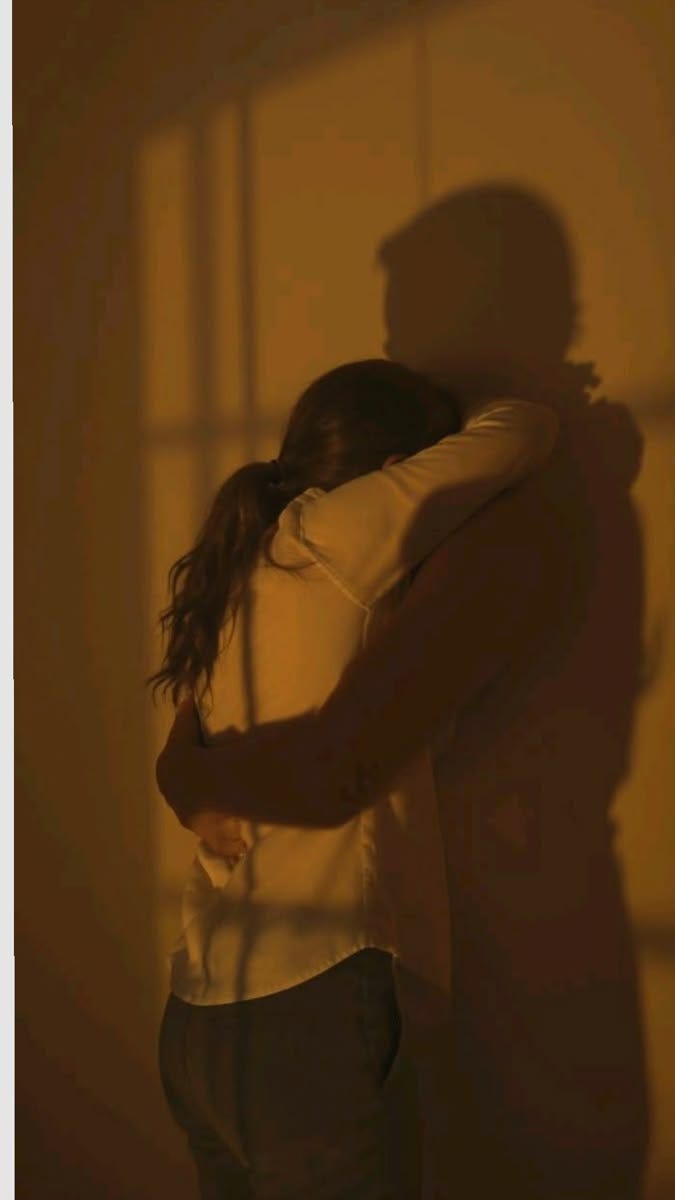
There is a hole in a life when someone leaves it. Not a metaphorical hole — a structural one. A gap in the architecture of the daily, a space that was occupied and is now not, shaped with extraordinary specificity to the dimensions of the person who used to fill it. This hole has a particular quality that distinguishes it from other kinds of emptiness: it is not general. It is not the vague vacancy of loneliness, which can in principle be filled by almost anything warm and present. It is a hole shaped like one specific person — their particular weight, their particular shape, the specific way they took up space in your hours and your thoughts and the room of your attention. Nothing else fits it. The world knows this and has decided, in its infinite and well-meaning practicality, that the correct response is to find something that fits approximately and press it into place before the edges have time to harden. The world calls this moving on. The world is, as it so often is in matters of the heart, entirely missing the point.
To love someone in their absence is considered, by most of the world’s available opinions on the subject, a form of failure. A refusal to heal. A sentimental attachment to a past that has, by definition, passed. The therapy industry has a word for it — several words, in fact, most of them beginning with un and ending in healthy — and the advice industry has an entire infrastructure of suggestions for how to dismantle it, ranging from the merely useless to the actively counterproductive. Keep busy. Meet new people. Remember your worth. As though love were a habit to be broken rather than a truth to be inhabited. As though the hole in the life were a problem to be solved rather than a testimony to be honoured. As though what the heart knows, with its inconvenient and irrefutable certainty, could be talked out of itself by sufficient distraction and an improved morning routine.
“To love someone after everything — after the silence, after the distance, after the world has made its case for alternatives and the heart has heard every word and remained entirely unmoved — is not failure. It is the purest form of love that exists. It is love with nothing left to prove.”
Consider what has been stripped away by this point. In the early days of love, there is so much noise around the feeling that it is genuinely difficult to know what you are actually feeling and what is simply the intoxicating chemistry of novelty and attention and the particular excitement of someone new looking at you with interest. The love of the beginning is real, but it is also crowded — crowded with hope and anticipation and the pleasurable anxiety of not yet knowing how the story goes, and with the human tendency to project one’s deepest needs onto the nearest available canvas. This is not a criticism of early love. It is simply an observation that it is not yet stripped down. It has not yet been tested. It has not been given the opportunity to show what it is made of when the pleasant circumstances that attended its birth have been removed and it is left alone with itself in an ordinary room on an ordinary evening with nothing to recommend it except its own truth.
Absence removes everything that is not essential. It is, in this sense, the most rigorous philosophical test that love can undergo — more rigorous than distance, more rigorous than difficulty, more rigorous even than the kindly offered alternative of someone else’s company. Absence takes everything away and asks, quietly, without any particular drama: what remains? And the answer, in the case of a love that is real, is always the same. Everything. Not everything in the sense of the crowded, noisy, hopeful beginning — but everything in the sense of the distilled, the essential, the irreducible truth of the thing. The love that survives absence is the love that was never anything other than itself. It needed the noise and the excitement and the mutual presence the way a building needs scaffolding — as a support during construction, not as a permanent feature. Remove the scaffolding and you see what was actually built. In a real love, what was actually built is extraordinary. In a love that was mostly scaffolding, what remains is very little, and the person discovers this with a relief they may not immediately recognise as such.
“The world will offer you a hundred things roughly the same size as the hole. None of them will be the right shape. The person who refuses to be consoled by approximately is not being difficult. They are being precise. They know the difference between the thing and something like the thing, and they have decided that the difference matters.”
There is a particular bravery in leaving the hole unfilled that the world consistently fails to recognise as bravery, preferring to categorise it as inability or weakness or an insufficient commitment to one’s own wellbeing. But consider what it actually requires. The world is very loud in its insistence that empty spaces be filled. It has an almost physical discomfort with vacancy — with the chair that holds no one, the hours that belong to no new arrangement, the heart that continues to be oriented toward something that is not currently present and returning that orientation. To resist this pressure — to say, quietly and without making a performance of it, I know the shape of what I love and I will not pretend that something else has the same dimensions — requires a commitment to truth over comfort that most people, when tested, find considerably more difficult than they anticipated. It is not passive. It is one of the most active choices available. It is the choice to remain honest about what one loves, in a world that rewards the appearance of being over it.
And here is what the world consistently fails to understand about the person who loves in absence: they are not pining. They are not suspended in grief, preserved in amber at the moment of loss, incapable of functioning in the ordinary world. They are, in many cases, living their lives with considerable fullness and even joy — growing, becoming, building the version of themselves that was always going to be the right person for the right person. They simply have not pretended, for the convenience of the people around them, that the thing they love has been replaced by something else. They are carrying it the way you carry something genuinely precious — not ostentatiously, not performatively, but carefully, privately, with the specific attentiveness of someone who understands the value of what they are holding and has no intention of setting it down just because a long time has passed and the corridor is cold.
To love someone after everything is, in the end, the answer to the only question that actually matters about love. Not do you love them when it is easy, when it is new, when the future is open and the feeling is mutual and the world is arranging itself cooperatively around your happiness. Anyone can love then. The question is whether you love them when none of that is true. When the silence has been long and the absence is real and the world is offering you, with great sincerity and great kindness, the reasonable consolation of something that will not hurt quite as much. Whether you love them still. Whether the love, stripped of everything that is not itself, of every comfortable circumstance and every reasonable incentive to continue — whether it is still there. Still true. Still, without apology or performance or any particular hope of immediate return, entirely and irrevocably itself.
The love that answers yes to that question is not a lesser love than the love of the beginning. It is not a sad love, or a stuck love, or a love that has failed to become something more practical. It is the love that has been tested so completely that what remains is only what was always real. It is love at its most pure. It is love with nothing left to prove. And there is nothing — no early intoxication, no mutual declaration, no shared future however bright — that comes anywhere near it for sheer, absolute, philosophically verifiable truth.
The world will offer you
a hundred things
roughly the same size.
None of them
will be the right shape.
The person who knows the difference —
who has felt the real thing
and refuses to mistake
approximately
for it —
is not broken.
They are
the most honest person
in any room.
That person was unique. In fact I dare say. No one else in the world perceived them in the way you did.
That “Shape” you long to see again. That you remember. Have tried to fill again in your life. It existed partially because of your perception of that person.
Unfortunately when they left. That altered you. It changed the way you perceive things. How could it not.
That energy that made you the person who perceived that person. That left with them. I believe when a person passes. This energy will some day be reunited after you pass with them.
I believe also that going forward you if are seeking someone in your life. That a new energy will determine your perception of that person.
That perception will tell you whether their “Shape” fits into your life.
Be well.
she’s done it again. you never miss.